

Memory Play
from the Open Poetics series published by Litmus Press
“Memory Play critiques dramatic tropes of memory while memory itself becomes part of the performance. One point of departure for writing the piece was Lev Vygotsky’s precept: “inner speech is social.” Reptile opens the play, self-consciously turning the interior memory into a problem of selection, representation, entertainment, and judgment, “If I tell you one thing I remember, you will think I am an idiot for telling you only one thing.” The inner speech turned outward can perform an array of meanings and values within an exchange. The fabulist figures of the play each shape a different relationship to modes of power, self-assertion, reflection, and control in games of mimesis and anti-mimesis.
Memory Play was first published by O Books in 1994 following a full production of the piece at the LAB in San Francisco. Artist John Woodall, who performed the role of Reptile and fabricated its mise en scene, “a little tent town out in the salt flats,” also designed the O Press Book. This first edition includes beautiful abstract drawings on vellum by Woodall. Leslie Scalapino took great care in producing the book with the “object status” envisioned by Woodall and me.
The second edition of Memory Play was published by SplitLevel Text along with two other works, Gardener of Stars: an Opera and Hannah Cut In. The publication of that edition caused me to reflect on the role of the figure of the child as a catalyst for some of my writings. This "child" is never the same child, and its appearances flickers in and out of focus variously within the works; what it catalyzes, especially in Memory Play, is a relationship between spontaneous speech, perception, imagination, and writing.
The digital aspect of the Open Poetics Archive edition of Memory Play has drawn me to thinking about the presence of industry, the post-industrial, and technology in a work that is fancifully set on salt flats, which are products of mining. The presences include Pelican’s loss of a “plant” (factory), genetic engineering and the references to engineers, the Child’s reported love of gadgets and inventiveness and her grappling with the problem of explosions from bombs to the big bang. And of course, there is the entrepreneurial Pelican’s trickster pitch that “memory is nothing but words stored up in an inefficient computer.” The other characters do not give Pelican the last word…”
– Carla Harryman
This digital critical edition of Memory Play, developed in collaboration with Harryman, features an annotated eBook of the text alongside a range of supplementary materials. These include performance documentation, a Russian translation of the play, critical writings on Memory Play, and additional scholarly resources. You can explore these materials through the curated resource collections.
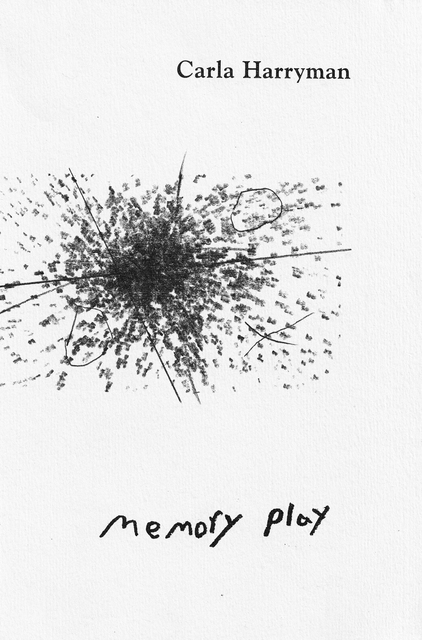

eBook
O Books, 1994
Memory Play
Carla HarrymanPublished- This text has 0 annotations
- This text has 0 highlights
Resources
Additional Material curated together with Carla Harrymann
Resource Collections
Contextual Coordinates
CollectionReception Zone
CollectionAbout the Author
CollectionPerformance & Translations
Collection
Metadata
- publisherManifold @CUNY
- publisher placeNew York, NY